AI eCommerce Technology Stack: Engineering High-Velocity Growth in 2026
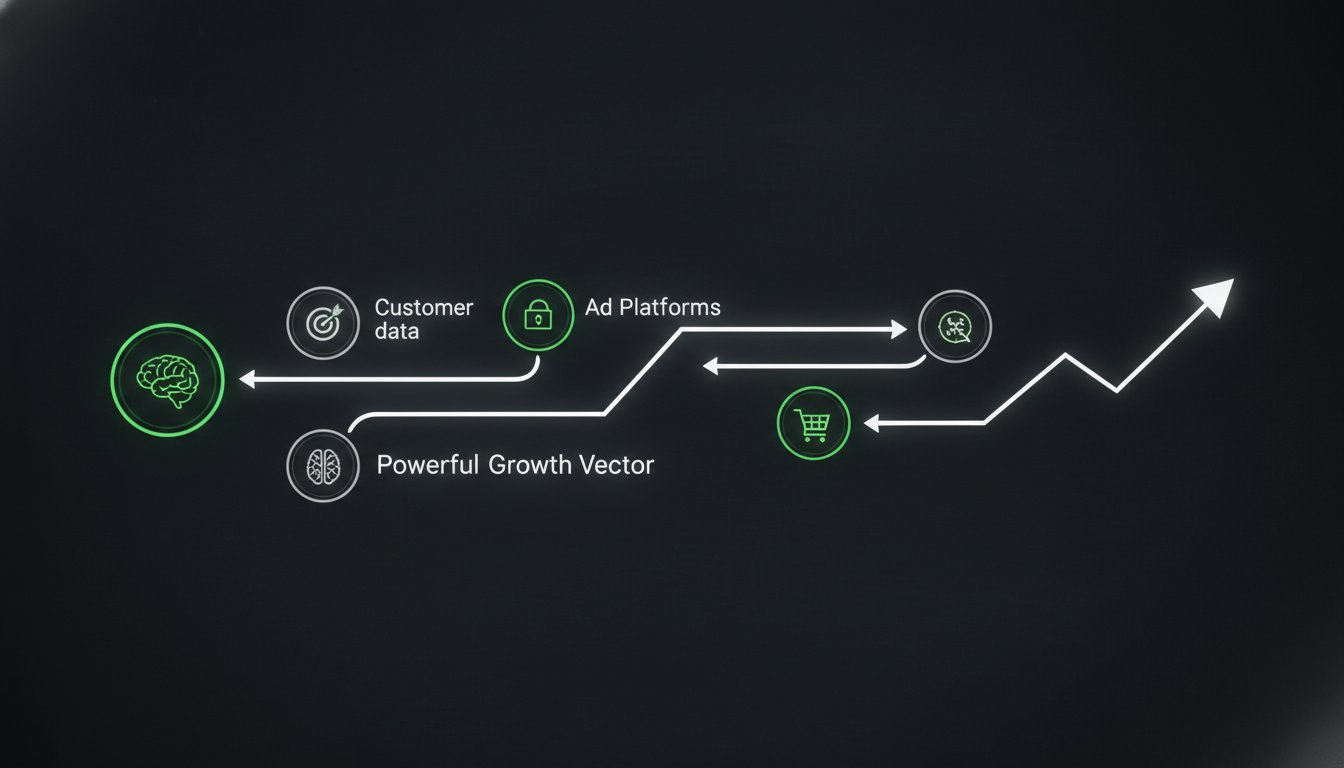
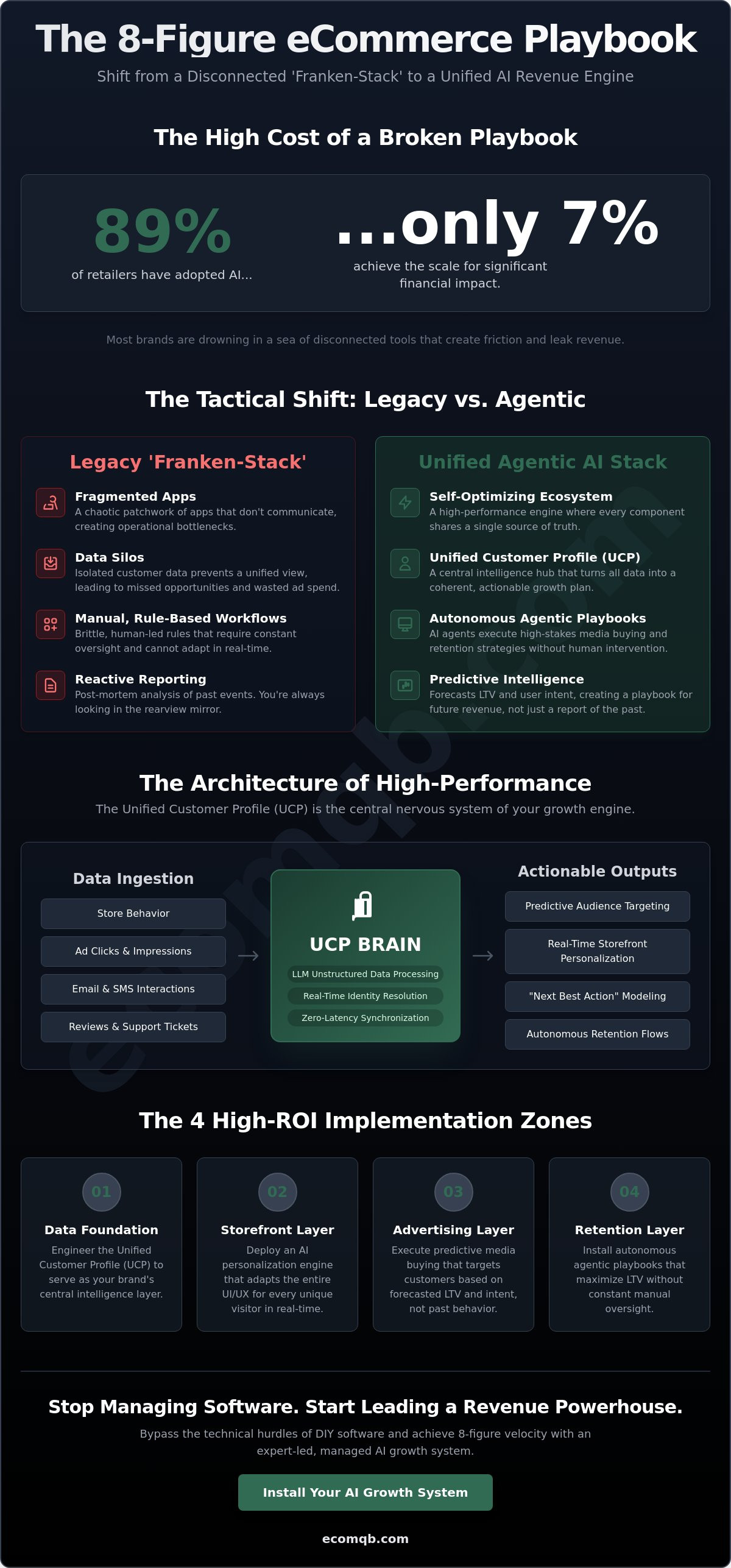
89% of retailers have adopted AI, yet only 7% have achieved the enterprise-wide scale required to drive a significant financial impact. Most brands are currently drowning in a sea of disconnected SaaS subscriptions that promise intelligence but deliver nothing but data silos and manual friction. If your current setup feels like a collection of expensive ornaments rather than a high-performance engine, you are losing the competitive race before it even starts.
You already know that the old playbook of "more tools equals more growth" is broken. You need a system that works as hard as you do. This guide will show you how to master the tactical shift to a unified, agentic AI eCommerce technology stack designed for 8-figure velocity. We will break down the exact architecture needed to eliminate market response latency, reduce acquisition costs through predictive targeting, and install a hands-off growth system managed by experts. It is time to stop managing software and start leading a revenue powerhouse.
Key Takeaways
- Shift from a fragmented list of apps to a unified AI eCommerce technology stack that functions as a self-optimizing revenue engine.
- Engineer a Unified Customer Profile (UCP) to serve as your brand's central intelligence, turning unstructured data into precise, actionable growth.
- Replace manual, human-led rules with autonomous agentic playbooks that execute high-stakes media buying and retention without constant oversight.
- Deploy AI across four high-ROI implementation zones to create seamless synergy between your storefront, advertising, and retention layers.
- Adopt a managed growth philosophy to bypass the technical hurdles of DIY software and achieve 8-figure velocity with expert-led systems.
Beyond the App List: Defining the 2026 AI eCommerce Technology Stack
In 2026, your technology is either a multiplier or a bottleneck. A modern AI eCommerce technology stack is no longer a static list of software subscriptions. It is a self-optimizing ecosystem that breathes with your business. For years, brands operated under the "Franken-stack" model: a chaotic patchwork of apps that didn't talk to each other. That era is over. High-performance brands have pivoted to unified agentic architectures where every component shares a single source of truth. It is the difference between surviving the market and dictating it.
This shift enables what we call Zero-Latency Revenue. It is the immediate fulfillment of customer intent. When a shopper clicks an ad, the stack identifies their psychological profile, predicts their next move, and adjusts the storefront in real-time. There is no delay. No friction. No missed opportunities. By integrating Artificial Intelligence in Marketing, brands finally bridge the gap between aggressive advertising, high-converting storefronts, and long-term retention. It turns your tech from a cost center into a high-velocity execution layer.
The Death of Disconnected SaaS
The "best-in-class" approach failed because it prioritized individual features over systemic flow. Disconnected SaaS tools create data silos that leak revenue every single hour. Integration friction forces your team into manual marketing workflows, wasting hours on data entry instead of strategic execution. 2026 leaders are consolidating. They are choosing agentic systems that automate the heavy lifting, allowing them to reclaim time and focus on market dominance. They want results, not another dashboard. They demand systems that analyze, adapt, and accelerate without human intervention.
Personalization as a System, Not a Feature
Stop thinking about personalization as a simple product slider at the bottom of a page. True growth requires an AI personalization eCommerce engine that functions as the nervous system of your store. This system adapts the entire UI/UX based on predictive intent. It changes headlines, offers, and layouts for every unique visitor. When a customer feels understood at scale, the psychological barrier to purchase vanishes. You aren't just selling a product; you are orchestrating an experience that feels inevitable. It's about precision, relevance, and speed.
The Architecture of High-Performance: Data Unification and LLMs
The brain of your AI eCommerce technology stack is the Unified Customer Profile (UCP). It is the central nervous system that dictates every movement your brand makes. Legacy systems fail because they treat data as a library of past events. Modern architectures treat data as a live fuel source. By utilizing Large Language Models (LLMs), your stack can now process unstructured data from email, SMS, and reviews. These models extract sentiment and intent, turning raw text into clear, actionable insights that drive revenue. This architecture is the foundation of a high-performance AI eCommerce technology stack.
High-velocity growth requires a technical foundation that supports real-time processing. If your data isn't synchronized instantly, your personalization is already outdated. You need a system that operates at the speed of the digital economy. This is about more than just storage; it's about the ability to ingest, interpret, and implement data at a scale humans can't match. It's about moving with precision, power, and pace.
Building the Unified Customer Data Layer
Scaling to 8 figures requires centralizing first-party data to fuel an eCommerce AI growth system. Identity resolution is the cornerstone of this process. It allows you to track the customer journey across multiple devices, ensuring a single, coherent view of every user. Eliminating "Data Lag" is non-negotiable. Real-time synchronization ensures that your advertising and storefront are always in sync with current user behavior. If your current data setup feels fragmented, it might be time to partner with experts who can unify your architecture for peak performance.
Predictive Intelligence vs. Reactive Reporting
Reactive reporting is a post-mortem; predictive intelligence is a playbook for the future. AI now allows brands to forecast Customer Lifetime Value (LTV) with startling accuracy before a second purchase is made. By implementing "Next Best Action" (NBA) modeling, your stack can automatically trigger the most effective offer or message for each user. Predictive intelligence is the ability to solve for a customer’s needs before they articulate them. This proactive approach allows you to move with certainty, precision, and speed, capturing market share that competitors leave on the table.
Legacy Rules vs. Agentic Workflows: The New Performance Standard
Legacy automation is a trap. Most brands are still running on rigid "If/Then" logic, believing they've automated their growth. They haven't. They've simply built a faster version of a broken, manual process. The 2026 performance standard requires a decisive shift from human-led rules to agentic playbooks. In a high-velocity AI eCommerce technology stack, the system doesn't wait for a human to approve a bid adjustment or a segment update. It acts. It executes. It wins. This is the difference between a static tool and an autonomous revenue engine.
Agentic workflows eliminate the oversight tax that frequently kills 7-figure brands. Operational bloat occurs when your team spends more time managing software than moving the needle. By deploying autonomous agents, you remove the latency between data and decision. These systems optimize bidding, creative rotation, and content in real-time, moving at a speed no human operator can match. You aren't just saving time; you're gaining a massive competitive advantage. It's about building a system that is lean, punchy, and precise.
The Failure of Manual Segmentation
Traditional "If/Then" logic is far too slow for the 2026 market. Revenue is lost every single hour that a manual email flow fails to capture a subtle intent signal. Leading AI transformation eCommerce brands are moving beyond static lists and rigid buckets. They've replaced human-built segments with dynamic AI cohorts that evolve as customer behavior shifts. This ensures every message hits the right psychological trigger at the exact moment of peak influence. You stop guessing and start converting with absolute certainty.
Agentic Media Buying: The Acquisition Engine
Integrating agentic media buying into your core technology stack changes the rules of the game. AI agents now manage Meta and Google ad spend by pulling real-time inventory and LTV data directly from your unified data layer. The machine doesn't just "run ads"; it orchestrates acquisition based on profit margins, stock levels, and predictive LTV. Your role shifts from managing ads to overseeing the machine. It's a high-stakes game that requires strategic mastery, not tactical button-pushing. You set the objectives; the machine delivers the results.
The 4 Implementation Zones for 8-Figure Velocity
To reach 8-figure velocity, you cannot deploy AI at random. You need a tactical roadmap that prioritizes high-ROI implementation zones. A unified AI eCommerce technology stack creates synergy between your storefront, advertising, and retention layers, ensuring no dollar is wasted. Migrating from a legacy stack to an agentic growth system requires precision, not guesswork. You must maintain brand authority while automating the individual experiences that drive conversion. It's about building a system that scales without diluting your brand’s soul. If you are ready to engineer this for your brand, book a strategic briefing to map your migration.
Zone 1: The Agentic Storefront
Your storefront should be as dynamic as your customers. Deploying agentic landing pages eCommerce solutions allows your site to adapt in real-time based on the traffic source and user intent. This isn't just about aesthetics; it's about Shopify conversion rate optimization powered by real-time behavioral AI. By personalizing search and discovery, you minimize the "time-to-cart" metric, making the path to purchase feel effortless and inevitable.
Zone 2: Zero-Latency Retention
Retention is where profit is won or lost. Move beyond basic automated flows and embrace agentic email marketing that responds to subtle behavioral shifts. Your tech stack should utilize dynamic offer generation, only discounting when the AI predicts a genuine churn risk. Pair this with hyper-personalized SMS replenishment reminders triggered by individual consumption rates. You aren't just sending messages; you are managing a relationship with surgical precision.
Zone 3: Predictive Acquisition
High-velocity acquisition requires a tight feedback loop. Your AI eCommerce technology stack must connect on-site behavior back to Meta and Google algorithms for precise lookalike modeling. This creates a virtuous cycle of data that improves your targeting every single day. Automated creative testing ensures the stack identifies winning assets and scales them instantly. You stop burning budget on underperforming ads and start fueling the winners with absolute confidence.
Zone 4: The Unified Intelligence Layer
The final zone is the integration of all data points into a single, actionable brain. This layer orchestrates the other three zones, ensuring that a win in acquisition leads directly to a win in retention. It provides the bird’s-eye view needed to make high-level strategic moves. When your advertising, storefront, and retention layers speak the same language, growth becomes a mathematical certainty rather than a gamble. This is the ultimate objective for any brand serious about market dominance in 2026.
Managed AI Transformation: The Tactical Path to Market Dominance
The biggest barrier to 8-figure growth isn't a lack of ambition. It's the belief that you need to build a massive internal engineering team to manage the technical complexity. This is a false choice. Most brands fail because they try to DIY their technical infrastructure, leading to bloated payrolls and stagnant results. A high-performance AI eCommerce technology stack requires specialized leadership, not just more headcount. You need a partner who understands the field, knows the playbooks, and executes with surgical precision. It's about moving from a defensive posture to a relentless offensive strategy.
The era of the "Self-Optimizing Brand" has arrived. This is a brand that out-scales the competition because its technology stack is constantly learning, adapting, and winning. It is a lean, punchy revenue engine that operates with zero-latency. By outsourcing the technical execution to "Field Generals," you stop being a software manager and start being a strategic leader. The ROI of managed execution is found in the speed of your results and the total elimination of manual friction. You aren't just buying technology; you're installing a culture of peak performance.
Managed Service vs. Software Subscription
Buying a tool is a liability; deploying a managed system is an asset. A software subscription gives you a hammer, but it doesn't build the house. eComQB takes a different approach by orchestrating your AI eCommerce technology stack as a complete, unified growth system. We handle the technical mechanics, the data unification, and the agentic workflows that drive revenue. This allows you to reclaim 40+ hours a week that were previously wasted on troubleshooting integrations and manual data entry. You focus on the high-level vision while we handle the engine room.
Your Next Move: The Growth Diagnostic
Every brand has revenue leaks. Most are hidden within a legacy stack that can't process data in real-time or predict customer intent. You need to identify these leaks before they compromise your momentum. Setting the trajectory for 8-figure velocity in the next 12 months requires a clear, tactical assessment of your current capabilities. Don't let technical debt hold your brand back from its true potential. You need to know exactly where the friction is and how to eliminate it. Your next move is simple. Book your tactical call to deploy your AI Growth System with eComQB.
Secure Your Competitive Edge: The Shift to 8-Figure Velocity
The market in 2026 does not reward those who play it safe with legacy tools. It rewards the decisive. You've seen how a unified AI eCommerce technology stack transforms a fragmented business into a high-performance engine. By unifying your data layer and deploying agentic workflows, you eliminate the friction that stalls most 7-figure brands. You've moved beyond the app list. You've identified the implementation zones that drive immediate ROI. Now, it is time to execute with surgical precision.
eComQB specializes in engineering 8-figure velocity for DTC brands through fully managed AI transformation and growth systems. We bring elite expertise in Agentic Media Buying and Shopify Excellence to ensure your machine is lean, precise, and unstoppable. You don't need more software subscriptions. You need a tactical partner who can orchestrate the mechanics while you lead the vision. The gap between the 89% of retailers who adopt AI and the 7% who actually scale it is your biggest opportunity. Close that gap today.
Stop managing tools and start engineering growth; book your call.
Frequently Asked Questions
What is an AI eCommerce technology stack?
An AI eCommerce technology stack is a unified, self-optimizing ecosystem of tools powered by machine learning and autonomous agents. Unlike a standard collection of apps, it centralizes first-party data to automate decisions across advertising, storefronts, and retention. It functions as a single revenue engine rather than a series of disconnected software silos. This architecture allows your brand to respond to customer intent with zero latency.
How does an agentic tech stack differ from traditional marketing automation?
Traditional automation relies on rigid, human-built "If/Then" rules that require constant oversight and manual updates. Agentic systems use intent-based logic to make autonomous decisions in real-time. They optimize bidding, creative testing, and customer journeys without human intervention. This shift eliminates the operational latency that slows down market response times, allowing you to move with precision, power, and pace.
Do I need to migrate away from Shopify to use an AI growth system?
No, you can deploy a high-performance AI eCommerce technology stack directly on top of your existing Shopify infrastructure. We specialize in Shopify excellence, integrating agentic landing pages and storefronts into your current setup. The goal is to enhance your existing platform with a sophisticated intelligence layer. You keep the platform you know while gaining the agentic execution required for 8-figure velocity.
How much data do I need before AI personalization becomes effective?
AI becomes effective as soon as you have clean, unified first-party data from your primary sales and marketing channels. While more data improves precision, modern LLMs can extract actionable insights from unstructured data like reviews and emails almost immediately. You don't need millions of records to start. You simply need a unified architecture that allows the AI to see and interpret the data you already have.
What is the typical ROI of a managed AI transformation for a DTC brand?
Early adopters of AI-driven personalization generate up to 40% more revenue than non-adopters according to verified market research. A managed transformation typically results in reduced operating costs and significantly higher customer lifetime value. By outsourcing the technical execution to specialized field generals, you reclaim strategic time. The system optimizes itself for maximum profit while you focus on high-level brand leadership.
How does an AI tech stack help reduce Customer Acquisition Cost (CAC)?
The system reduces CAC by connecting on-site behavioral signals back to advertising algorithms for predictive targeting. It automates creative testing to scale winning assets instantly and identifies high-LTV lookalikes with surgical precision. This feedback loop ensures your ad spend is always directed toward the most profitable segments. You stop burning budget on underperforming ads and start fueling winners with absolute confidence.
Can agentic workflows handle my brand’s unique voice and creative strategy?
Yes, agentic systems are trained on your specific brand guidelines, historical content, and customer interactions to maintain total consistency. They execute the mechanics of growth while adhering to your strategic vision. You maintain the bird’s-eye view and set the objectives; the machine handles the high-velocity execution. It is a tactical partnership where the technology scales your creative intent without diluting your brand’s soul.
What are the first steps to upgrading a legacy eCommerce stack in 2026?
Start with a comprehensive growth diagnostic to identify revenue leaks and data silos in your current setup. Focus on unifying your first-party data into a single customer profile to serve as the brain of your new architecture. From there, prioritize high-ROI implementation zones like agentic media buying and personalized storefronts. This roadmap allows you to build immediate momentum and scale toward market dominance with certainty.