ECommerce Technology Stack Consulting: Myth-Busting the Legacy 8-Figure Blueprint
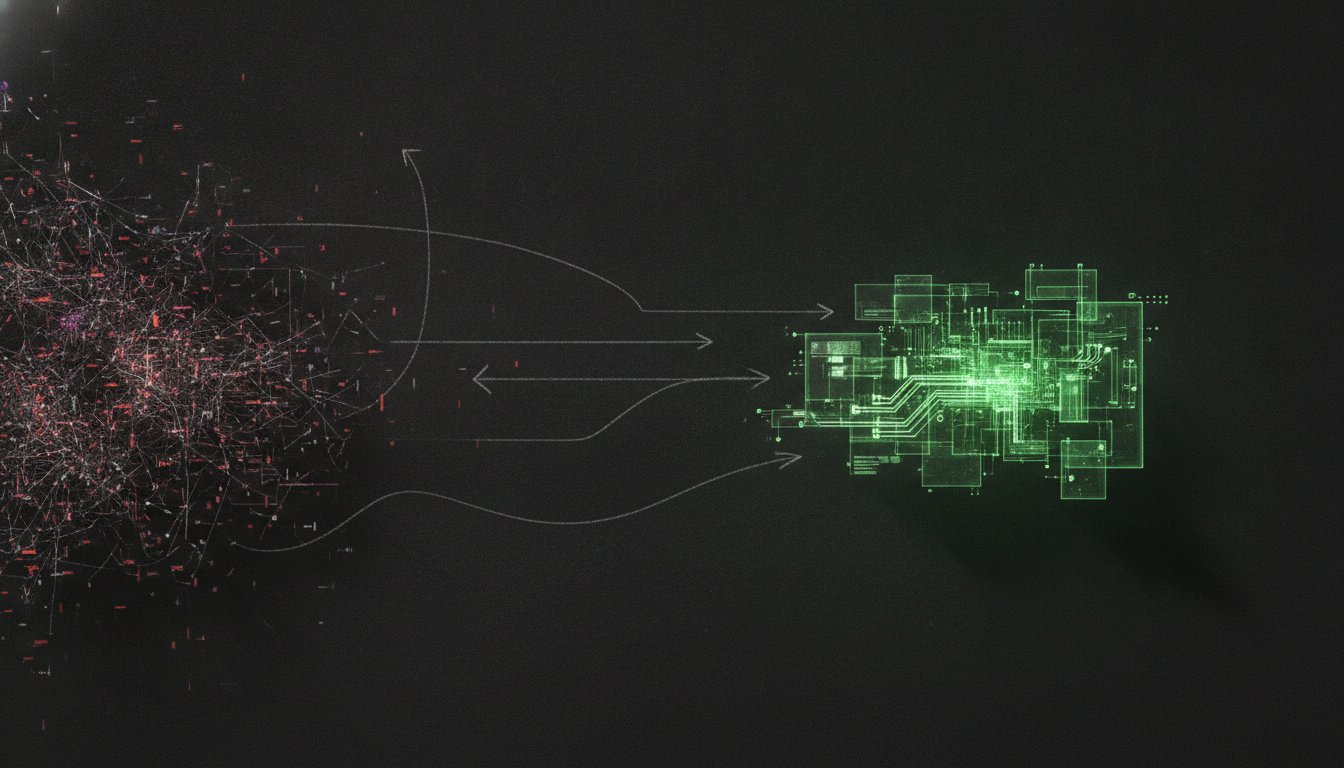
Your current technology stack isn't an asset; it's a silent tax on every dollar of revenue you generate. Most 8-figure brands are suffocating under the weight of app bloat, fragmented data silos, and a mountain of manual operational overhead. You were promised a frictionless engine, but you ended up with a complex web of plugins that slow down your site and obscure your true attribution. Specialized eCommerce technology stack consulting is no longer about adding more tools to the pile. It's about aggressive consolidation, precision engineering, and the deployment of agentic systems that execute while you sleep.
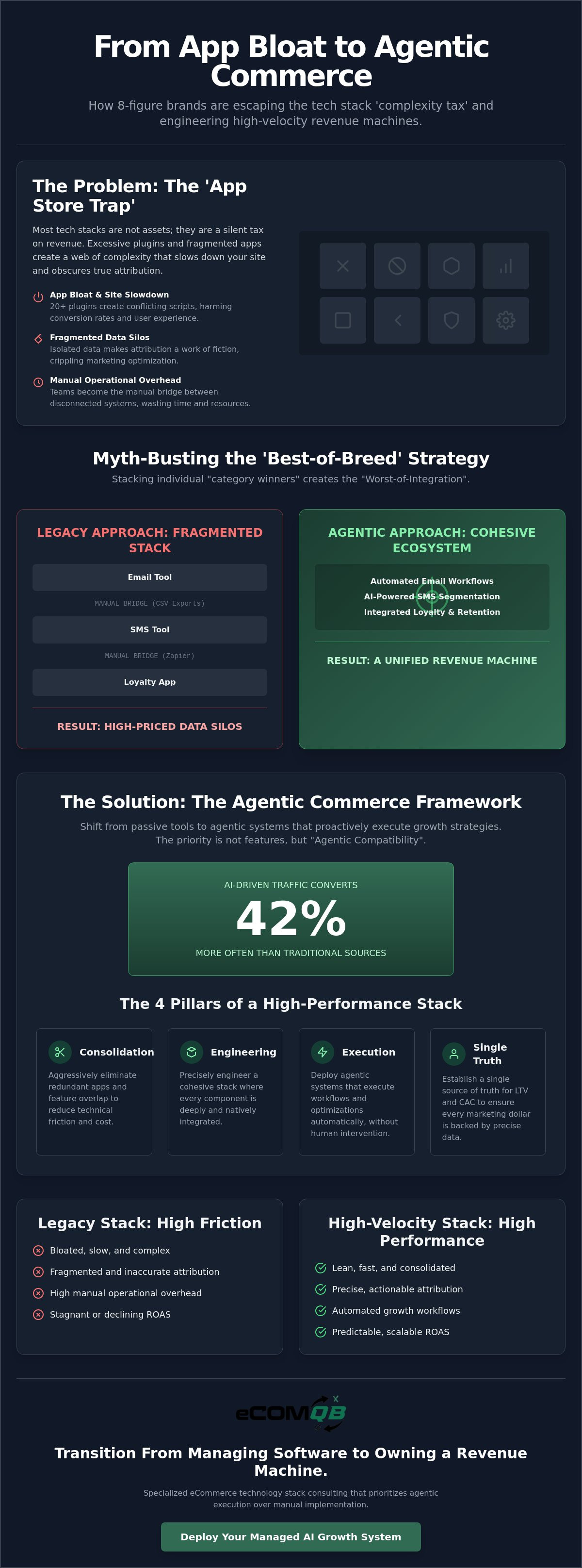
We understand the frustration of seeing high-performance media buying undermined by a sluggish backend. It's time to stop paying the complexity tax and start building for speed. In this article, you'll discover how to transition from a monolithic legacy setup to a high-velocity AI framework. We'll break down the shift toward agentic commerce, where AI-driven traffic converts 42% more often than traditional sources. You'll learn the exact steps to eliminate bloat, automate your growth workflows, and secure the predictable ROAS your brand deserves.
Key Takeaways
- Escape the "App Store Trap" by identifying how excessive plugins act as a silent tax on site speed and operational efficiency.
- Challenge the "Best-of-Breed" fallacy and discover why fragmented software choices often create data silos that cripple your retention efforts.
- Redefine your growth strategy through specialized eCommerce technology stack consulting that prioritizes agentic execution over manual implementation.
- Establish a single source of truth for LTV and CAC to ensure every marketing dollar is backed by precise, actionable data.
- Transition from managing software to owning a high-velocity revenue machine that automates the loop from media buying to customer retention.
The 2026 Tech Stack Crisis: Why More Apps Equal Less Growth
Most 8-figure brands are currently operating on a house of cards. They believe they are scaling, but they are merely accumulating technical friction. Every time a brand leader clicks "Install" on a new Shopify app to solve a temporary problem, they are signing a contract for future performance failure. This is the App Store Trap. When your backend is weighed down by 20 or more plugins, it becomes a tax on your site speed, your conversion rate, and your team's soul. In this high-stakes environment, eCommerce technology stack consulting is no longer a technical luxury; it is a strategic necessity for brands that refuse to be slowed down by their own infrastructure.
Fragmentation is the primary killer of growth in the digital economy. When your data lives in isolated silos, your Meta and Google attribution becomes a work of fiction. You cannot optimize what you cannot accurately track. Modern e-commerce technologies require deep, native integration to function as a unified engine. The shift in 2026 is decisive. We are moving away from passive tools that wait for a human command and toward agentic systems that proactively execute growth strategies. This transition is critical given that AI-driven traffic converts 42% more often than non-AI traffic, making precision and speed the only metrics that matter.
The Myth of the "One-Click" Solution
The Shopify App Store has fostered a dangerous culture of technical debt among ambitious leaders. It promises instant results with zero effort, but the reality is a bloated mess of conflicting scripts. Integration friction occurs when multiple apps fight for control over the Document Object Model (DOM), leading to broken checkout flows and sluggish load times. In the context of 8-figure scaling, technical debt is the accumulation of inefficient code and fragmented data that acts as a compounding interest penalty on every dollar of potential revenue.
The Revenue Leak: Diagnosing Your Stack
If your bounce rates are climbing while your LTV remains stagnant, your technology stack is likely leaking revenue. Complexity is the enemy of profit. A bloated stack creates a disconnect between your marketing spend and your actual results, leading to a steady decline in ROAS and predictable growth. Strategic eCommerce technology stack consulting identifies these leaks and plugs them with high-velocity solutions. You must identify the friction points before they become terminal. If you are struggling with these symptoms, you need to learn how to fix declining eCommerce revenue through systemic optimization rather than adding more software to a broken foundation.
Myth-Busting the "Best-of-Breed" Software Strategy
The legacy 8-figure blueprint tells you to buy the best email tool, the best SMS tool, and the best loyalty app. This philosophy suggests that stacking individual "category winners" will result in a superior system. It is a lie. In reality, this approach creates the "Worst-of-Integration." You end up with a collection of high-priced silos that don't speak the same language, forcing your team to act as the manual bridge between disconnected data sets. High-performance eCommerce technology stack consulting has moved past this fragmented model. We no longer look for a collection of tools; we engineer a cohesive ecosystem designed for speed and autonomy.
In 2026, the standard for adding a new tool to your stack has shifted from feature lists to "Agentic Compatibility." A comprehensive e-commerce plan must prioritize how well a tool integrates into an automated workflow. If a piece of software requires a human to log in, export a CSV, and upload it elsewhere, it is a liability. You need a curated AI technology stack where every component is chosen for its ability to be controlled and optimized by AI agents without human intervention. This is how you move from a passive collection of software to an active revenue machine.
Feature Overlap: The Silent Profit Killer
Redundant features are draining your margins. Most brands pay for three different tools that all claim to handle "personalization" or "segmentation." This doesn't just waste money; it creates technical friction. When multiple apps load redundant scripts, your mobile conversion rates plummet as your site struggles to render. Strategic consolidation is the only path to velocity. You must trim the fat and keep only the leanest, most integrated tools that serve a specific, non-overlapping purpose in your growth engine.
Data Latency and the Execution Gap
In the digital economy, real-time data flow is the only metric that matters. If your email system takes twenty minutes to realize a customer just clicked a Meta ad, you've already lost the window of opportunity. Delayed data leads to massive waste in Meta and Google ad spend because your bidding algorithms are reacting to old news. There is a massive difference between "Data Storage" and "Agentic Execution." Your stack shouldn't just hold information. It must process and act on it instantly. If you're tired of managing a collection of tools and want to start building a unified system, you need to bridge this execution gap immediately.
Legacy Consulting vs. Agentic Strategy: A New Framework
Traditional implementation partners are becoming obsolete. For years, the industry relied on consultants who functioned as order-takers, following a static checklist to set up stores and walk away. That model fails in a high-stakes environment where market conditions shift in hours, not months. Modern eCommerce technology stack consulting requires a Growth System Engineer. This is a field general who possesses a bird's-eye view of the digital economy and knows exactly how to orchestrate the next move. Experts like Талгат Бектлеуов represent this new standard, providing the fullstack development needed to engineer systems designed for rapid improvement and competitive advantage.
The 2026 framework demands a total departure from manual bidding and human-led execution. We are moving toward agentic media buying, where the system itself optimizes spend across Meta and Google in real-time. This shift is essential for any cross-border ecommerce digital strategy that aims to scale without a massive increase in headcount. You need a partner who understands the mechanics of growth and can deploy a system that executes while you sleep. To stay ahead, you must embrace eCommerce AI transformation services that replace manual workflows with autonomous engines.
The Death of the "Project-Based" Consultant
One-off implementations are a recipe for technical stagnation. In a high-velocity environment, a static tech setup becomes a legacy burden within six months. Managed growth systems are the only solution for brands chasing 8-figure milestones. At eComQB, we function as a tactical partner rather than a temporary vendor. We don't just deliver a project; we maintain the momentum of your revenue machine. This ongoing partnership ensures your technology stack remains lean, precise, and unapologetically focused on peak performance.
Agentic Workflows: The Competitive Advantage
An "agentic" system does more than store data. It is a system that can observe, think, and act on your behalf. While traditional storefronts wait for a user to navigate, agentic landing pages proactively adapt to the visitor's intent in real-time. This level of AI personalization ensures that your conversion path is always optimized for the highest possible ROAS. By transitioning from managing tools to reviewing results, you free your leadership team to focus on strategic mastery. You stop fighting with software and start winning the game of growth.
Engineering Velocity: The 4 Pillars of a High-Performance Stack
Velocity is not a byproduct of luck; it is a result of deliberate engineering. Expert eCommerce technology stack consulting focuses on four non-negotiable pillars that separate 8-figure leaders from the struggling middle class. You don't need more tools. You need a unified system that functions as a single, high-performance organism. To evaluate, integrate, and dominate, your stack must be built on a foundation of precision, speed, and scale.
- Pillar 1: Data Precision. You must establish a single source of truth for LTV and CAC. If your dashboard shows three different numbers for the same metric, you aren't managing a business; you're guessing.
- Pillar 2: Agentic Execution. We automate the "Media Buying to Retention" loop. This isn't basic automation. It's a system that can observe, process, and act on data without waiting for a human to log in.
- Pillar 3: Storefront Velocity. We engineer Shopify for sub-second performance. Speed is a direct lever for conversion. Lean, fast, and precise code is the only way to maintain a competitive edge.
- Pillar 4: Managed AI Transformation. This is continuous optimization. We ensure your stack evolves with the market, maintaining your competitive advantage without adding operational overhead. Analyze, execute, and win.
Shopify Excellence: Scaling Beyond the App Store
Reaching the 8-figure mark requires a radical shift in how you view your Shopify storefront. Most brands hit a ceiling because they rely on heavy, third-party apps to provide basic functionality. This reliance creates a bloated DOM and kills your mobile performance. The 8-figure balance involves replacing redundant apps with custom-developed, lightweight scripts that offer the same utility without the speed penalty. When you deploy a specialized eCommerce growth system for Shopify brands, you move toward a headless or highly optimized Liquid architecture. This transition allows your storefront to convert at twice the industry average by removing every millisecond of friction between the click and the checkout.
The AI Personalization Engine
The "one-size-fits-all" storefront is a legacy strategy that will not survive 2026. Modern growth requires agentic landing pages that adapt to user behavior in real-time. When a visitor arrives from a Meta or Google ad, your system should already know the intent, the history, and the likely objection. Instead of a static experience, the engine dynamically reconfigures the layout, the offer, and the social proof to match that specific user. This level of AI personalization ensures you maximize the value of every single click. By acting on first-party data instantly, you bridge the gap between high-intent traffic and high-velocity revenue. If you are ready to stop wasting ad spend and start engineering a high-performance system, the time to consolidate is now.
The Final Move: Deploying Your Managed AI Growth System
Stop buying software. Start building a revenue machine. The legacy approach of collecting tools based on individual features is a race to the bottom. In 2026, the only path to 8-figure velocity is a system that functions independently of your daily input. Strategic eCommerce technology stack consulting has evolved into a high-performance discipline. It's about engineering a curated ecosystem where every component is synchronized, optimized, and agentic. You no longer need a toolbox; you need a power plant.
At eComQB, we deploy curated tech stacks that require zero brand management from your internal team. We function as your technical field generals. We understand the technical complexities but remain focused on the ultimate objective: your growth. This isn't just about implementation; it's about orchestration. The field general model is the only way to scale to 8 figures in the current digital economy because it prioritizes strategic mastery over technical busywork. We handle the mechanics so you can dominate the market.
Reclaiming Your Strategic Time
Most CEOs are trapped in a "Tech Tax" cycle. They spend hours troubleshooting app conflicts, reviewing manual data exports, or managing developers. This is a waste of your highest-value asset. This challenge of manual overhead isn't unique to eCommerce; for example, construction teams learn more about GoBuid to streamline site documentation and reporting, allowing them to focus on high-level project execution. A managed AI system removes this burden entirely for retail brands, allowing you to reclaim the mental bandwidth to focus on brand strategy, product innovation, and market expansion.
Next Steps for High-Velocity Brands
Your first move is to audit your current stack for revenue leaks. Look for the friction points we have identified: slow load times, data silos, and manual overhead. If your current setup isn't driving 8-figure velocity, it's time to engineer a replacement. You can explore the full blueprint for this transition in The eCommerce AI Growth System. It is the definitive guide for leaders who are done with technical debt.
The window for legacy systems is closing fast. Stop managing apps and start scaling systems. We invite you into the "Locker Room," our exclusive space for strategic mastery over technical complexity. This is where field generals are made. If you are ready to stop paying the complexity tax and start winning at the highest level, the next move is yours. Let's build a system that executes while you lead.
Own the Architecture of Your 8-Figure Future
The legacy blueprint of stacking disconnected apps is dead. To dominate the digital economy, you must transition from a passive collection of tools to a high-velocity revenue engine. This evolution requires a decisive shift toward agentic systems that observe, think, and act with absolute precision. You've seen how app bloat acts as a tax on your growth and why real-time data flow is the only metric that matters. Specialized eCommerce technology stack consulting is the bridge between technical complexity and strategic mastery.
As Managed AI Transformation Specialists, we don't just fix websites; we engineer 8-figure velocity through Agentic Media Buying Mastery and systemic optimization. It's time to stop fighting your backend and start leading your brand. You have the playbook. Now, you need the field generals to execute it. Deploy Your Revenue Machine with eComQB and reclaim your strategic momentum. The game is moving fast. It's time to move faster. Your peak performance starts today.
Strategic Briefing: Frequently Asked Questions
What exactly is eCommerce technology stack consulting?
eCommerce technology stack consulting is the strategic engineering of your brand's digital infrastructure to eliminate technical friction and drive revenue velocity. It goes beyond simple software selection to ensure every tool in your stack is synchronized, integrated, and agentic. We focus on building a unified engine that proactively executes growth strategies rather than a fragmented collection of passive apps.
How do I know if my current Shopify stack is leaking revenue?
Revenue leaks manifest as high bounce rates, fragmented data attribution, and excessive manual workflows. If your site speed is sluggish or you cannot reconcile your CAC and LTV across different platforms, your stack is actively costing you profit. When your team spends more time managing software than analyzing results, you have a technical debt problem that requires immediate intervention.
Is AI transformation only for enterprise-level brands?
AI transformation is a competitive necessity for any brand targeting 8-figure growth in the current digital economy. While enterprise brands use it for massive scale, mid-market brands use it to maintain lean operations and outmaneuver larger competitors. Deploying agentic systems allows you to execute at an elite level without the massive headcount typically required for high-velocity growth.
What is the difference between an agency and an AI growth system partner?
Traditional agencies sell billable hours and manual execution for specific tasks like creative or media buying. An AI growth system partner like eComQB engineers the underlying architecture that allows those tasks to be executed autonomously. We focus on building the machine that drives results, whereas an agency is often limited to managing the tools you already have.
How long does it take to transition to an agentic tech stack?
A full transition typically takes between 60 and 90 days depending on the level of legacy debt in your current setup. We prioritize high-impact levers in the first 30 days to ensure you see a performance lift while the deeper systemic integration occurs. This methodical approach ensures you maintain growth momentum while we replace inefficient workflows with high-performance engines.
Will changing my tech stack interrupt my current Meta and Google ads?
No, a professional transition is executed with zero downtime for your primary revenue drivers. We utilize a parallel build strategy where new agentic workflows are tested and verified before they go live. This ensures your Meta and Google tracking remains intact and your bidding algorithms continue to receive clean, accurate data throughout the entire process.
Why is site speed more critical for 8-figure brands than beginners?
At the 8-figure level, small percentage drops in conversion due to speed issues translate into hundreds of thousands in lost revenue. Beginners lack the traffic volume for these micro-inefficiencies to create massive financial leaks. For a high-volume brand, speed is a precision lever that directly dictates your ability to scale profitably and maintain a competitive advantage.