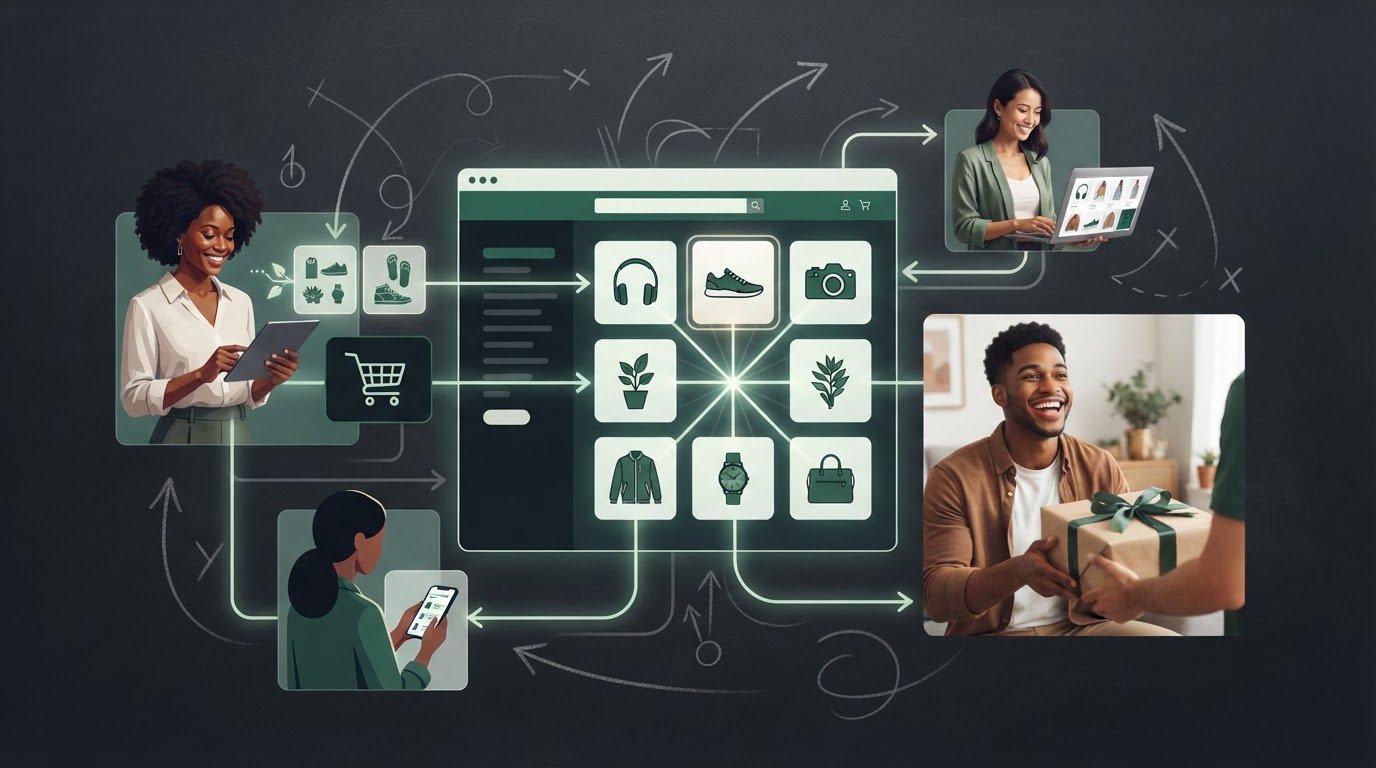
Repeat purchases keep an eCommerce business moving, while loyalty gives customers a reason to choose your brand again. Building customer loyalty in eCommerce means going beyond reminders and rewards to create relevant, reliable experiences that earn trust over time. Retention shows whether customers return; loyalty helps explain why they choose you.
You already know that keeping a customer matters. The strategic advantage comes from making every interaction useful and personal, not automating for automation’s sake. This article explains why loyalty matters, how it differs from retention, and how tailored recommendations and timely outreach can strengthen customer relationships.
Get a practical playbook for using customer insights, personalized content, and automated email and SMS to make each touchpoint count. The goal is to turn one-time purchases into repeat relationships without relying on discounts alone.
Key Takeaways
- Use customer interests and purchase behavior to make recommendations and loyalty rewards more relevant.
- Prioritize product quality and a dependable customer experience before adding rewards to your retention strategy.
- Automate timely, personalized email and SMS outreach, then adjust messages and rewards based on engagement.
- Track repeat purchases as a retention signal, and look at customer trust and preference to understand loyalty.
1. Personalized content and product recommendations
Treat each customer as a person, not a profile number. Use browsing behavior, past purchases, and stated preferences to select recommendations that fit their needs. A customer who bought a coffee machine, for example, may value compatible filters more than unrelated kitchenware. Best Buy recorded a 23.67% increase in sales using a recommendation system, showing how relevant suggestions can support commercial performance.
Segment customers using meaningful signals such as product category, purchase frequency, or engagement. Then match each group with a relevant offer: early product access may appeal to repeat buyers, while a useful guide may better serve first-time customers. Reward actions such as purchases or reviews with benefits suited to customers’ interests. Free shipping, exclusive access, or special products can add value without making discounts the only reason to return.
The first 30 days after purchase are a valuable window for thoughtful follow-up. Send a useful care tip, setup instructions, or product-specific recommendations rather than a generic sales message. A personalized email can also recognize what the customer bought and suggest a relevant next step. Personalized emails have a 29% higher open rate, making relevance a practical lever for getting messages noticed.
Customer service, shipping, and returns shape loyalty because they determine how dependable the buying experience feels. Clear delivery updates, helpful answers, and a straightforward returns process can reduce friction when something goes wrong. Make each post-purchase message useful: confirm the order, share relevant shipping information, then offer support or product guidance suited to the purchase. These personal touches turn routine transactions into a more considered customer experience.
2. Customer Loyalty in E-Commerce: Why Is It Important?
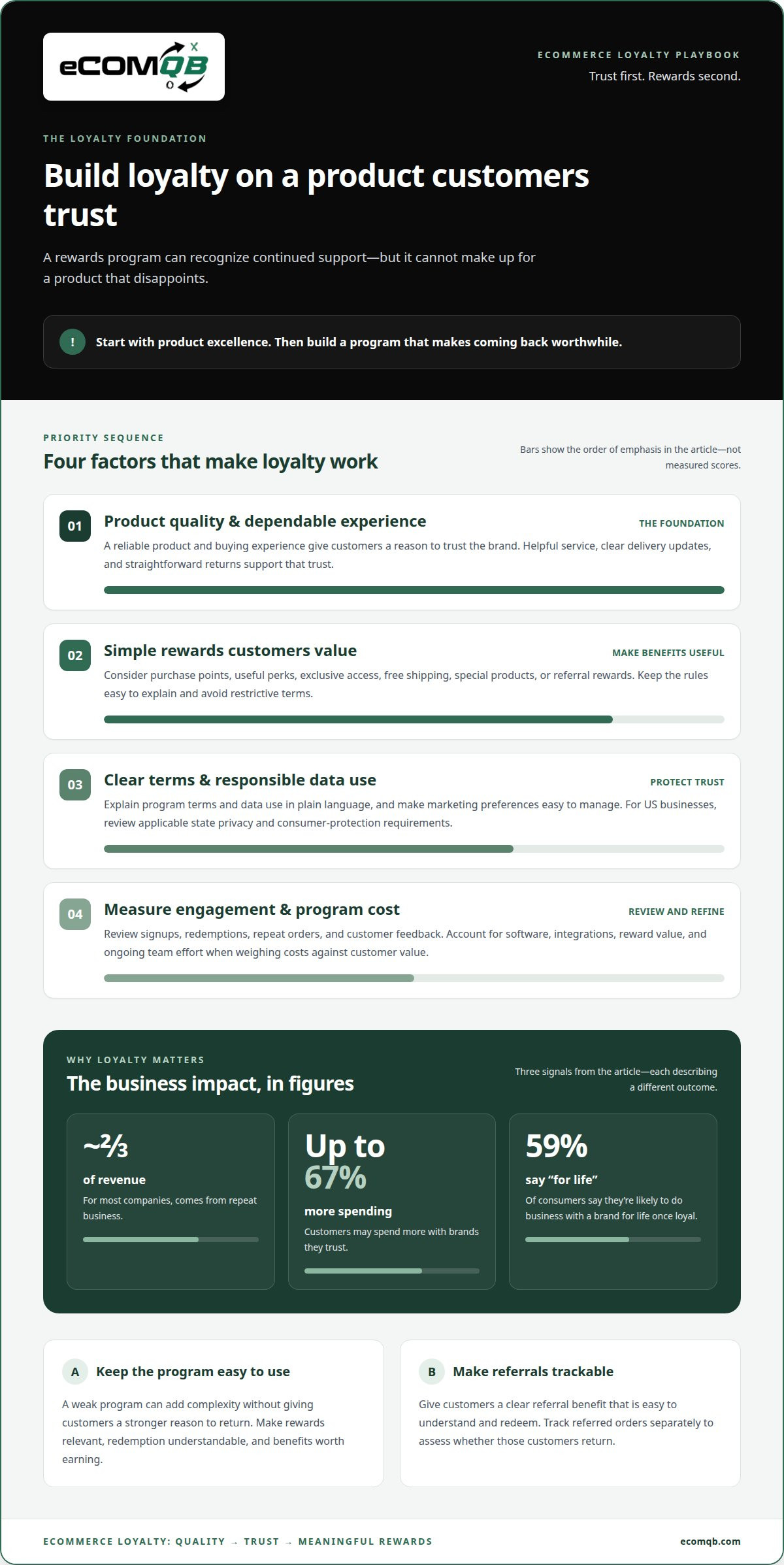
Product excellence is the foundation; rewards can’t compensate for a product that disappoints. Nearly two-thirds of revenue for most companies comes from repeat business, and customers spend as much as 67% more with brands they trust. Loyalty can also compound: 59% of consumers say they’re likely to do business with a brand for life once loyal. Start by improving product quality, then build a program that recognizes customers’ continued support.
Keep the program simple and valuable. Offer purchase points, useful perks, or referral rewards such as bonus points or small gifts. Avoid systems that take too long to explain, reward actions customers don’t value, or hide restrictive terms. A weak program adds complexity without giving customers a stronger reason to return. Review signups, redemptions, repeat orders, and customer feedback to see whether the benefits encourage engagement.
For US eCommerce businesses, privacy considerations depend on customers’ locations, the data collected, and how it is used. Make program terms clear, explain data use in plain language, and make marketing preferences easy to manage. Review relevant state privacy and consumer-protection requirements before launch. Program costs also vary with software, integrations, reward value, and ongoing team effort. Map these cost drivers before choosing a structure, then weigh the full operating cost against customer value.
Referrals can extend loyalty beyond the original purchase. Give existing customers a clear reason to recommend the brand, then make the reward easy to understand and redeem. Track referred orders separately from other program activity, so you can assess whether referrals bring customers who return. For a focused plan connecting product experience, program design, and growth strategy, explore eCommerce loyalty strategy.
3. Automated loyalty outreach
Automation turns loyalty activity into timely, relevant messages. Build triggers around clear customer actions: joining a program, earning points, redeeming a reward, or leaving a purchase incomplete. Give each trigger a defined purpose. A welcome message can explain how rewards work, while a redemption confirmation can clarify what happens next. Tie each message to the customer’s action, not just their presence in your database.
Connect loyalty tools with point-of-sale systems, email, and text messaging. Integration helps align online and in-store activity, so purchases or redemptions can inform follow-up across channels. For example, a completed purchase can trigger an email receipt followed by product guidance relevant to the order. Coordinate messages across systems to avoid duplicate updates by email and SMS.
Make reward reminders specific and useful. If a free-shipping reward expires in 7 days, send a clear reminder that names the benefit and explains how to redeem it. A vague “don’t miss out” message gives little direction. State the expiration date, show the redemption step, and keep the action easy to find. The goal is to help customers use a benefit they’ve earned, not create pressure with unclear terms.
Track loyalty campaigns, redemptions, and program signups together. Each measure reveals a different part of the journey: signups show interest, redemptions show reward use, and campaign engagement shows whether outreach gets attention. If signups rise but redemptions slow, review the reward’s relevance and the steps required to redeem it. If a message gets little engagement, adjust its timing, audience, or content instead of repeating the same send.
Use each campaign as a feedback loop. Compare performance before and after changing a message or reward, then keep the version that better supports customer action. For example, test a reminder focused on the reward’s benefit against one that explains how to redeem it. Automated outreach works best as a managed system: connect customer activity, send purposeful messages, and refine the sequence as results change.
4. Customer retention compared with customer loyalty
Retention and loyalty are connected, but they measure different outcomes. Retention shows whether customers continue buying from your store. Loyalty reflects why they return, including trust, preference, and willingness to recommend your brand. A shopper who returns only for a discount demonstrates retention, but not necessarily strong loyalty. A customer who chooses your brand despite alternatives signals a deeper relationship.
That distinction changes how you interpret performance. A repeat order is useful evidence, but it doesn’t explain the reason behind it. Compare purchasing behavior with customer feedback, referral activity, and engagement with rewards. For example, if repeat orders rise while referrals remain flat, customers may be responding to convenience rather than actively advocating for your brand. Use both behavioral and attitudinal signals to sharpen your strategy.
Measure retention by tracking how many customers from a defined starting cohort remain active during a later, consistent period. Calculate repeat purchase rate by dividing customers who make multiple purchases within your chosen window by the customers who purchased during that window. Estimate customer lifetime value using average order value, purchase frequency, and the length of the customer relationship. Together, these measures show return behavior, repeat buying, and expected customer value.
Read the metrics together. Rising repeat purchase rates alongside stronger referrals can indicate that customers both return and recommend your brand. If retention improves but customer feedback points to frustration, investigate the experience before increasing promotional pressure. Track cohorts consistently, since changing the measurement window can distort comparisons. Segment results by acquisition source or product category to identify where lasting preference develops, not merely where another purchase occurs.
Build a measurement plan that separates repeat behavior from customer preference. Plan your retention and loyalty strategy.
EComQB: Revenue Generating AI Tools
eComQB helps eCommerce brands connect personalization and retention goals with practical AI capabilities. Its Revenue Generating AI Tools and AI transformation for eCommerce Brands support businesses ready to bring customer data, marketing activity, and growth priorities into a more coordinated strategy.
Turn to eComQB when you’re ready to assess how AI can support more relevant customer experiences and improve the systems behind your marketing. Agentic Media Buying and Meta Advertising Execution can support paid acquisition, complementing retention efforts with a clearer view of how customer growth and repeat business fit together. Start by defining the challenge, identifying the customer signals that matter, and aligning the work with your business priorities.
Contact eComQB to discuss your eCommerce growth priorities.
Make loyalty part of your growth system
A durable approach to building customer loyalty in eCommerce starts by treating every interaction as a signal. Decide who owns those signals, how teams will act on them, and what customer experience the business intends to deliver. That clarity keeps personalization connected to strategy instead of turning it into disconnected campaigns.
Set a focused priority for your next planning cycle. You might refine the experience for a key customer segment, align teams around consistent brand interactions, or identify where AI can support more relevant engagement. Choose a direction that fits your business, then make the customer benefit clear. Strong loyalty grows from deliberate choices repeated throughout the customer relationship.
For support shaping that direction, contact eComQB to discuss loyalty. Take the next step with focus, and give customers a reason to choose your brand again.
Frequently Asked Questions
Customer Loyalty in E-Commerce: Why Is It Important?
Customer loyalty matters because it turns a completed transaction into a preference that can withstand competing offers. Loyal customers may share useful feedback, recommend a brand, and give it another chance after a service issue. For an online store, that trust can strengthen its reputation and reduce dependence on constant acquisition campaigns. Treat loyalty as a relationship outcome, not simply a points balance.
What are the most effective ways to build customer loyalty in eCommerce?
Start with a product and buying experience customers can rely on, then make the next purchase easy to navigate. Review customer comments for recurring friction, such as confusing product details or unclear order updates, and address the underlying issues. Choose rewards that support a behavior your business values, such as referrals or useful reviews. Reassess the approach using customer feedback and purchase patterns.
Which eCommerce loyalty program types work best: points, tiers, cashback, or subscriptions?
The best structure depends on what customers value and how they shop. Points suit brands seeking to reward several actions, while tiers can recognize sustained engagement through clear, status-based benefits. Cashback offers a direct, easy-to-understand reward. Subscriptions work when customers receive ongoing value, such as convenient access or recurring benefits. Compare each model for customer appeal, ease of explanation, and operational fit.
How can online stores personalize loyalty rewards and customer experiences?
Use customer preferences to shape both the reward and the message. For example, a customer who regularly shops in one product category could receive early access to related items, while another may prefer a service benefit. Let customers set communication preferences, and suppress offers that conflict with recent purchases. This makes personalization more useful and gives shoppers greater control over their experience.
What are the best loyalty program platforms for US eCommerce businesses, and how do they compare?
No single platform suits every store. Compare options by checking how they connect with your eCommerce platform, customer records, email, and text messaging. Then assess reward flexibility, segmentation, redemption tracking, and reporting. A store prioritizing simple points may need different capabilities from one building tiers or subscriptions. Map essential workflows first, then compare platforms against those requirements.
What are common risks and mistakes when building an eCommerce loyalty program?
Common pitfalls include complicated rules, rewards customers don’t want, and benefits that erode margins without encouraging valuable behavior. A program can also frustrate members if its terms change without clear communication. Before launch, test the earning and redemption journey from a customer’s perspective. Define what success means for the business, review program activity, and adjust the rules when customers struggle to understand or use the benefits.